PressureAlert® is a three-component pressure monitoring system that enables health care providers and patients to prevent and manage wounds. Technology includes sensor-containing dressings, tablet with monitoring/alert system software, and cloud-based platform for remote monitoring and storage of clinical history.
The PressureAlert® System prevents and heals wounds by alerting patients and caregivers when the patient has applied too much pressure for too long to a high risk area of the body.
Passionate Health Care Leaders
At Position Health, we are passionate about providing innovative, cost-effective solutions for the prevention and treatment of pressure injuries.
The next generation of pressure ulcer prevention is here. And no matter what clinical setting you’re in, Position Health® has the tools and the expertise to deliver it to patients and caregivers.
FOCUSING ON OUTCOMES
At Position Health®, we are passionate about providing innovative, cost-effective solutions for the prevention and treatment of pressure injuries.
Our Clinicians are ready to provide the support, education and tools you need to lower pressure injury prevalence in your facility. By focusing on outcomes, we deliver patient-centered solutions.
Pressure Ulcers,
Injuries & Bedsores
A pressure ulcer is an injury to the skin as a result of sustained pressure applied to the skin over time (friction and shear play a role as well). The pressure results in reduced blood flow and eventually causes skin breakdown and the development of an open wound.
Our Innovative Smart Monitoring Technology for Pressure Ulcers
We have taken a global approach in educating and providing an innovative proven solution for woundcare.
According to the National Pressure Injury Advisory Panel (NPIAP) a pressure injury, also known as a pressure ulcer or bed sore, is localized damage to the skin and underlying soft tissue usually over a bony prominence or related to a medical or other device. The injury can present as intact skin or an open sore (ulcer) and may be painful. The injury occurs as a result of intense and/or prolonged pressure or pressure in combination with shear and/or friction forces.
Why is prevention important?
Prevention of pressure injuries/ulcers is key because they can lead to serious complications such as infection, gangrene, amputation, and ultimately in some cases death. The image on the left shows 11 of the most common places where pressure ulcers occur. These 11 sites include the back of the head, upper spine prominence (between the shoulder blades and spine), left and right hip, lower back or sacrum (tailbone), left and right ischium bones (buttocks), back of the elbows on left and right arm, and left and right heel. Of the 11 at-risk areas mentioned above, pressure injures are most prevalent on the sacrum and the heels.
How To Treat Heel Pressure Ulcers
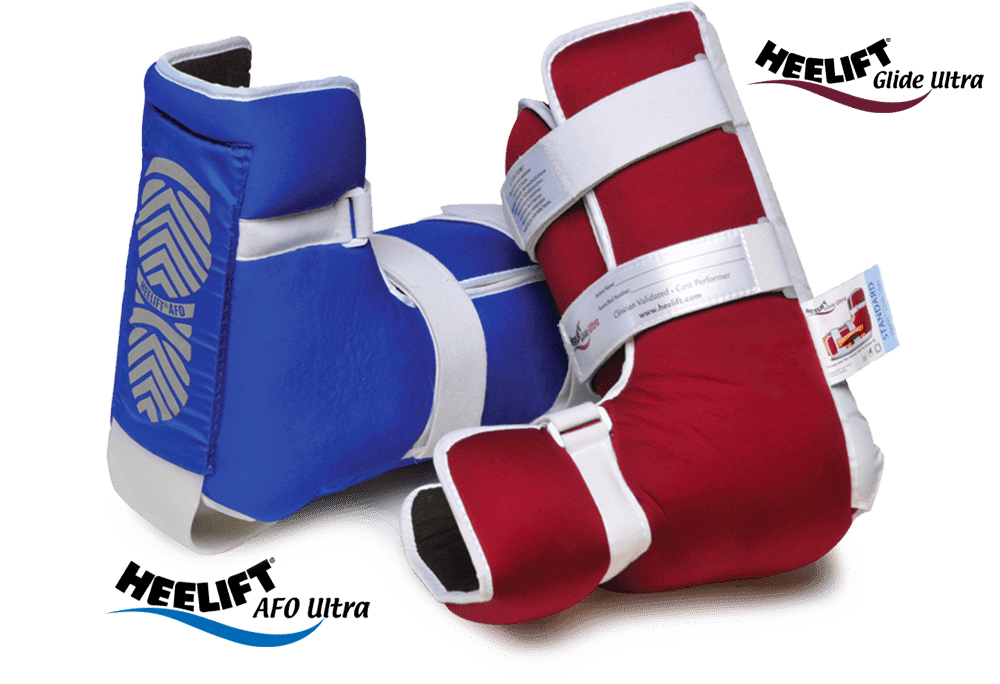
Overall, the most effective strategy to prevent and treat heel pressure ulcers is pressure redistribution. A professional heel-offloading device that floats the heel is usually recommended for successful pressure redistribution. The device needs to provide patient comfort and ease of use as it floats the heel. Appropriate offloading, adequate ventilation and friction-free materials are all important features for any product that will be used to prevent or treat heel pressure sores.
Our Mission to Healthcare Innovations
As a veteran owned business, we pride ourselves in bringing you solutions based on real data and real outcomes.
About Us
Solutions That Matter
Clinical Experts
Providing solutions from large medical facilities to home health patients

Quality products that we stand by 100%. Professional service you can count on. From our patient turn assist products to our ankle boots, we provide solutions that matters to you.
Our quality and comfortable products elevates patient care while helping you cut cost. Products that you can rely on, delivered right to your door. View our Store.
We invite you to view our product and clinical resource pages, customized with educating patients, caregivers, clinicians, hospitals and healthcare professionals. Contact us today to learn more.